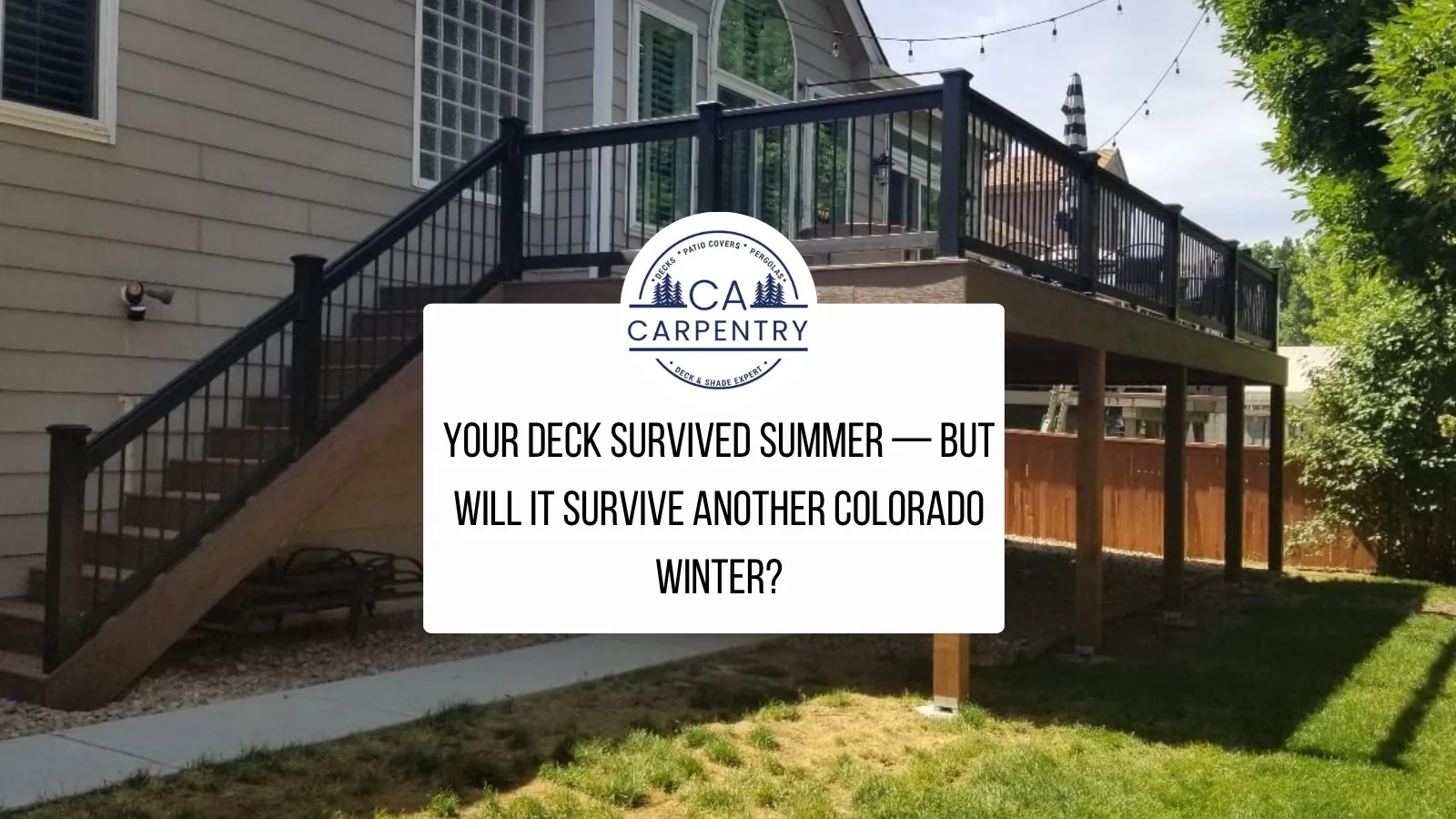
Summer can make almost any deck look good.
The real test comes when Colorado winter arrives.
Snow, moisture, freezing temperatures, and repeated freeze-thaw cycles can expose weaknesses that were easy to ignore during warmer months. A deck that feels solid today may look very different after another season of harsh weather.
Below, we’ll cover how deck winter damage usually starts, a simple pre-winter checklist, what to do before the first snow, and when to call a professional. You can also browse our custom deck and deck repair projects.
Small Problems Don’t Stay Small in Winter
A loose board, small crack, or slightly unstable railing may not seem urgent right now.
But once moisture gets into damaged wood and temperatures drop, those problems can become much worse.
Watch for signs like:
- Cracked or splintering boards
- Soft or deteriorating wood
- Loose railings
- Rusted fasteners
- Unstable stairs
- Water collecting in certain areas
These may be early warnings that your deck needs attention. We cover each of them in more detail in our guide to the signs it’s time to replace or repair your deck.
Moisture Is the Biggest Cause of Deck Winter Damage
Snow and ice eventually melt.
If water repeatedly penetrates the wood or remains trapped around joints and posts, it can contribute to rot, movement, and structural deterioration.
And sometimes, the most important damage isn’t visible from the top of the deck.
Joists, beams, posts, and connection points underneath can weaken long before the surface looks seriously damaged.
The connection to the house deserves extra attention. If its flashing is missing or failing, melting snow can run behind it all winter. More on this in why some decks start failing after a few Colorado winters.
Would You Trust Your Deck Covered in Snow?
Imagine your deck after a heavy snowfall.
Now add wet wood, freezing temperatures, furniture, and people walking across it.
Would you still feel confident about its condition?
If the answer isn’t an immediate yes, it may be worth having it checked before winter puts additional stress on the structure.
A Pre-Winter Deck Checklist You Can Do This Weekend
You don’t need special tools to catch deck winter damage early. Pick a dry afternoon and work through these:
- Walk the whole surface slowly and note any boards that flex, bounce, or feel soft.
- Push firmly on every railing post and section. They should not move.
- Look underneath with a flashlight at posts, beams, and joists for dark staining, cracks, or crumbling wood.
- Press a screwdriver into suspicious spots. Healthy wood resists; rotted wood lets it sink in easily.
- Look for rust streaks around nails, screws, bolts, and metal connectors.
- Check where the deck meets the house for gaps, stains, or signs of water getting behind it.
What to Do Before the First Snow
A little preparation in the fall can reduce the stress winter puts on your deck:
- Sweep off leaves, pine needles, and debris, especially from the gaps between boards, so water can drain.
- Move planters and rugs off the boards so moisture doesn’t stay trapped underneath all season.
- Clear gutters and make sure downspouts don’t empty onto or right next to the deck.
- Use a plastic shovel, push along the direction of the boards, and avoid rock salt on the deck surface.
- Tighten loose screws and replace any fasteners that are obviously missing or rusted through.
These steps won’t fix structural problems, but they help keep a healthy deck healthy.
Repairing Now Could Save You a Bigger Project Later
Not every deck problem means you need a complete replacement.
Sometimes replacing damaged boards, reinforcing connections, correcting unstable sections, or repairing structural components can help extend the life of your deck.
The important part is catching problems before another winter makes them worse.
When to Call a Professional
Some things are fine to handle yourself. Others are a sign the structure needs a trained eye:
- Soft or rotted wood in posts, beams, joists, or the connection to the house
- A deck that sways, bounces, or leans
- Railings that move when you lean on them
- Stairs that shift or pull away from the deck
- Heavy rust or corrosion on structural hardware
Your deck made it through summer. Now is the time to make sure it’s ready for what comes next.
At CA Carpentry, we help homeowners identify deck damage, complete necessary repairs, and determine when replacement may be the safer long-term option. Owner Chet Anderson started as a framing carpenter in 1995 and still runs the job sites, so the person looking at your deck understands how it was built. Learn more about our deck repair and deck building in Castle Rock.
Frequently Asked Questions
When should I have my deck checked before winter in Colorado?
Early to mid fall is ideal, before the first hard freeze and the first real snow. That leaves time to schedule any repairs while the weather is still cooperative.
Can deck winter damage be repaired, or does the deck need to be replaced?
Many problems can be repaired, such as replacing damaged boards, reinforcing connections, or fixing stairs and railings. If rot has spread through the framing or the connection to the house, replacement may be the safer long-term choice.
Should I shovel snow off my deck?
Yes, especially after heavy storms or when snow is going to sit for days. Use a plastic shovel, push along the boards rather than across them, and skip rock salt, which can damage the surface.
Is Your Deck Ready for Another Colorado Winter?
Contact CA Carpentry today to schedule a deck evaluation before snow, ice, and freezing temperatures turn small problems into expensive repairs.
Request a free on-site estimate (we usually come out within one business day) or call us at 720-628-0173, Monday through Friday, 8am to 6pm. We’re licensed, insured, and BBB accredited with an A+ rating.