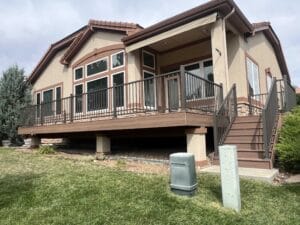

Most Greenwood Village homeowners who build or replace a deck end up at the same question: composite or wood? Both can look great and both can last, but they age very differently under intense high-altitude sun, snow and freeze-thaw cycles.
If you are weighing a composite deck in Greenwood Village against a classic wood deck, this guide compares them honestly on what matters day to day: maintenance, sun and heat, appearance, longevity, budget factors and HOA approval.
The short version: there is no wrong answer, only a better fit for how you live and how much upkeep you want.
Start With How You Will Use the Deck
Before comparing boards, think about the deck itself. Is it a sunny west-facing deck off the kitchen, a shaded spot under mature trees or a large entertaining space? Exposure, foot traffic and how long you plan to stay in the home all push the decision one way or the other.
When we design composite and wood decks in Greenwood Village, that conversation comes first. The material follows the use, not the other way around.
Maintenance: The Biggest Difference
This is where composite earns its reputation.
- Composite: Periodic washing to remove dirt, pollen and leaves. No sanding, staining or sealing.
- Wood: Regular cleaning plus resealing or restaining, especially on sun-exposed decks. Skip it and the boards gray, check and splinter.
If you enjoy a weekend project and like a freshly finished look, wood is rewarding. If you would rather spend weekends using the deck than maintaining it, a composite deck is hard to beat.
Sun, UV and Heat Underfoot
Colorado’s high-altitude sun is hard on every exterior material. Unprotected wood dries out, fades and cracks along the grain. Composite resists that, though quality varies and some colors can lighten over time.
Heat is the trade-off people do not always hear about. Composite boards, especially darker colors, can get noticeably hot on summer afternoons. Wood tends to stay more comfortable for bare feet.
Ways to manage heat on a sunny deck:
- Choose lighter composite colors for full-sun exposures
- Add shade with a pergola or patio cover over part of the deck
- Put dining and seating on the shadier side of the house
Many homeowners pair their deck with a custom pergola in Greenwood Village for exactly this reason. It cools the surface and makes late afternoons usable.
Appearance and How Each Ages
Wood offers real grain, warmth and the option to change color later with a new stain. Over time it develops character, or, if neglected, it weathers unevenly.
Today’s composite comes in a wide range of colors and grain patterns, and it holds a consistent look for years. Some homeowners love that uniformity; others find it less natural than wood. The best way to decide is to see samples in person, in sunlight, next to your home’s exterior.
Longevity and the Frame Underneath
Composite decking resists rot, insects and splintering, so the surface usually holds up better than wood with the same level of care. A well-maintained wood deck can still serve a family for many years.
What people forget is the frame. Whatever goes on top, the structure underneath needs to be engineered, properly flashed at the house and set on solid footings. We build engineered wood frames, and our article on treated lumber vs. steel deck framing explains why that is the right call for most Colorado decks.
Budget and HOA Factors for a Composite Deck in Greenwood Village
We do not quote prices in an article, because every deck is different. These are the factors that move the number:
- Decking material and product line: composite usually costs more upfront, while wood costs more to maintain over the years
- Deck size, height and shape
- Railing style
- Stairs, landings and multiple levels
- Site conditions such as slopes and soil
- Removal and disposal of an old deck
Many Greenwood Village neighborhoods also have HOA design review, which can limit colors or materials. CA Carpentry prepares the HOA design packets, and every project is permitted with the city. Railings are often part of that review, so see our guide to deck railing options in Colorado as well.
Frequently Asked Questions
Is a composite deck in Greenwood Village worth it?
For many homeowners, yes, mainly because it eliminates staining and sealing in a sunny climate. If you prefer the feel of natural wood and do not mind the upkeep, wood remains a solid choice.
Does composite decking get hot in the Colorado sun?
It can, especially darker colors in full sun. Lighter colors and shade from a pergola or patio cover make a big difference.
How often does a wood deck need to be sealed in Colorado?
It depends on sun exposure, the product used and foot traffic. A simple check is to sprinkle water on the boards: when it soaks in instead of beading, it is time.
Do Greenwood Village HOAs allow composite decking?
Many do, but rules vary by neighborhood, often around colors and railing styles. Check your covenants early; we prepare the design packet for review.
See Both Options on Your Own Deck
CA Carpentry has built custom decks since Chet Anderson founded the company in 1995, with a focus on outdoor living since 2003. We are licensed, insured and BBB accredited with an A+ rating since 2009, and we serve homeowners throughout Greenwood Village from our Castle Rock shop.
Bring your questions and we will bring samples. Request a free on-site estimate or call 720-628-0173, Monday through Friday, 8am to 6pm.