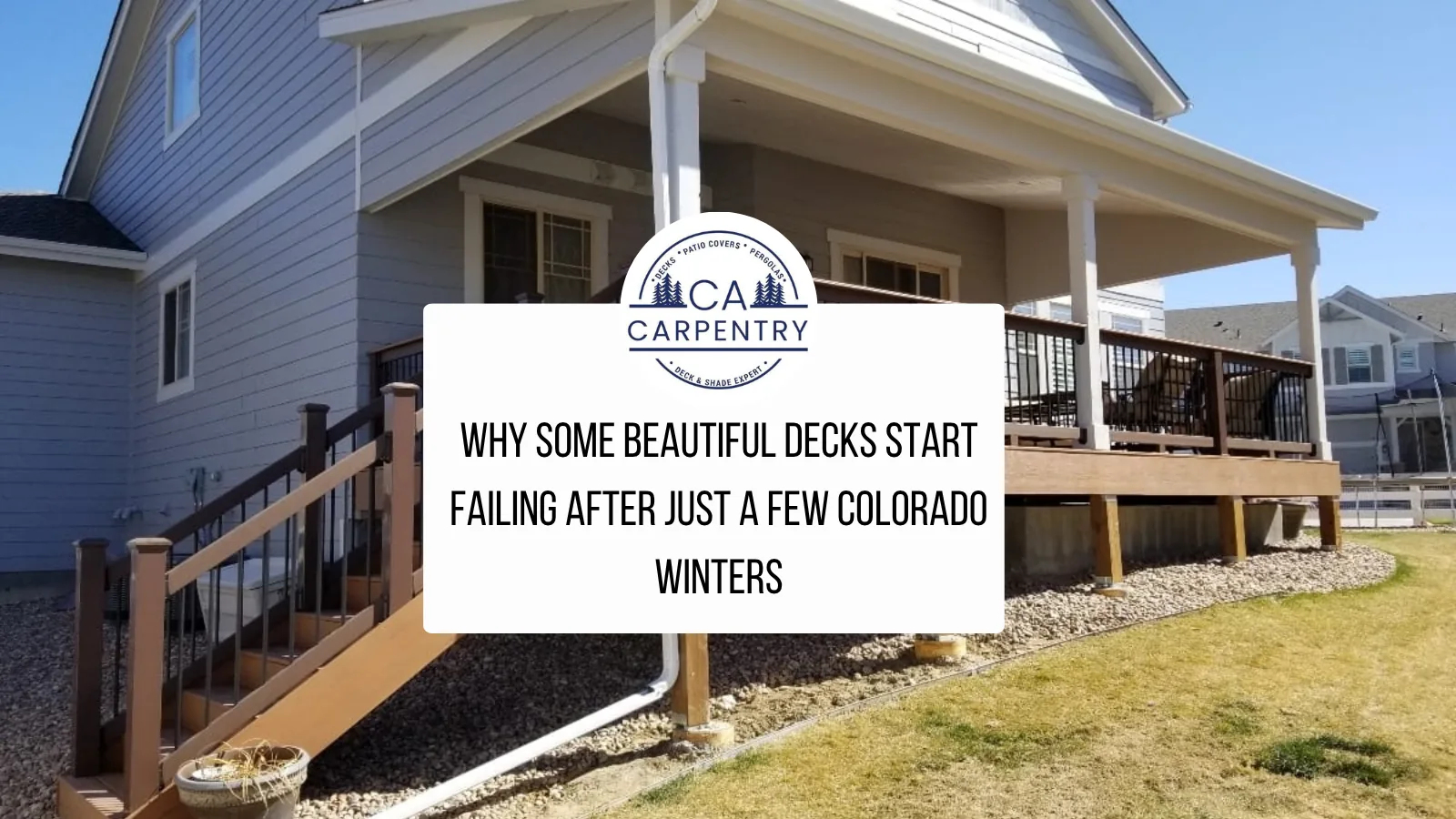
A deck can look beautiful on the outside and still be developing serious problems underneath.
In Colorado, a few harsh winters can be enough to expose weaknesses in the structure, materials, and installation—sometimes much sooner than homeowners expect.
Here’s why it happens, and what it takes to avoid the deck problems Colorado winters tend to expose. See how we approach framing and finishes in our custom deck gallery.
1. Freeze-Thaw Cycles Put Constant Pressure on the Structure
Colorado temperatures can change quickly.
Moisture enters small cracks and gaps, freezes, expands, and then thaws again. Over time, this repeated cycle can weaken wood, loosen connections, and cause movement in the structure.
On the Front Range, that cycle can repeat many times in a single winter. A sunny afternoon melts the snow, and a cold night freezes whatever water found its way into the deck.
2. Hidden Moisture Can Damage the Wood
Snow and ice eventually melt.
If water becomes trapped around boards, posts, joists, or fasteners, it can lead to rot and deterioration that may not be visible from the surface.
By the time the damage is obvious, the problem may already be extensive.
Common trouble spots include the tops of joists under each board, the bases of posts, and the connection where the deck attaches to the house. If that connection isn’t properly flashed, water can run behind it every time snow melts.
3. Weak Connections Can Become a Bigger Problem
A deck depends on more than boards and railings.
Screws, bolts, brackets, and connection points help keep the entire structure together.
If those components loosen, rust, or were not installed correctly from the beginning, winter conditions can accelerate the problem.
Hardware that isn’t rated for outdoor use or for contact with treated lumber can corrode faster than expected. Missing connectors, undersized bolts, or nails used where bolts belong are shortcuts that often stay hidden until something starts to move.
4. Materials Matter More Than Appearance
A beautiful finish doesn’t always mean the materials underneath are holding up well.
Some wood may crack, warp, or deteriorate faster when exposed to repeated moisture and freezing temperatures.
The quality of the materials—and how they were installed—can make a major difference in how long a deck lasts.
That applies to the frame as much as the decking. Composite boards can still sit on a wood frame that wasn’t built for Colorado conditions. If you’re weighing framing options, our comparison of treated lumber vs. steel framing for Colorado decks explains the trade-offs.
5. Small Problems Can Stay Hidden for Years
One of the biggest risks is assuming everything is fine because the deck still looks good.
Loose boards, soft wood, unstable railings, sagging areas, or movement underfoot can all be signs that something underneath is changing.
Because these changes happen slowly, they’re easy to get used to. A slight bounce becomes “just how the deck feels.” A railing that wiggles a little becomes normal. Meanwhile, moisture and movement keep working on the framing below.
That’s why a yearly look underneath matters. Our pre-winter deck checklist walks through what to look for before the snow arrives.
6. Ground and Drainage Get Overlooked
A deck is only as stable as what it stands on. Downspouts that empty under the deck, soil that slopes toward the house, or footings that weren’t sized for local conditions can all lead to settling and uneven movement.
Expansive clay soils in parts of the metro add another layer. As the ground gets wet and dries out, it can shift posts and footings over time.
How to Avoid the Deck Problems Colorado Winters Expose
A deck that lasts isn’t an accident. Whether we’re building new or repairing an existing deck, these are the details that make the difference:
- An engineered frame sized for the span and the load it will carry
- Footings built to your city or county’s requirements and suited to the soil on your lot
- Proper flashing where the deck connects to the house
- Corrosion-resistant hardware suited to outdoor use and treated lumber
- Board spacing and airflow so water can drain and the frame can dry out
- Permits and inspections, so the work is checked along the way
For repairs, the goal is to fix the cause, not just the symptom. Replacing a soft board without finding out why it stayed wet usually means replacing it again in a few years.
Frequently Asked Questions
Why is my deck failing after only a few years?
Early failure usually comes down to trapped moisture, weak or corroded connections, poor drainage, or materials that weren’t suited to Colorado’s freeze-thaw cycles.
What are the most common deck problems Colorado homeowners run into?
Rot at posts, joists, and the house connection, loose or wobbly railings, rusted hardware, and boards that crack or warp are the most common. Many of these start out of sight, underneath the deck.
Can a failing deck be repaired instead of replaced?
Often, yes. If the framing is mostly sound, damaged boards, connections, stairs, and railings can usually be repaired. If rot has spread through the structure, replacement may be the safer choice.
How often should I have my deck checked?
Look it over yourself every fall and spring, and have a professional evaluate it if you notice soft wood, movement, or rust on structural hardware.
Is Your Deck Built to Last Through Colorado Winters?
If your deck still looks good but something feels off underfoot, it’s worth finding out why before another winter does more damage. CA Carpentry has been building in Colorado since 1995, and owner Chet Anderson still runs the job sites.
Request a free on-site estimate (we usually come out within one business day) or call us at 720-628-0173, Monday through Friday, 8am to 6pm. We serve homeowners across Douglas, Arapahoe, Denver, Jefferson, and Adams counties.