

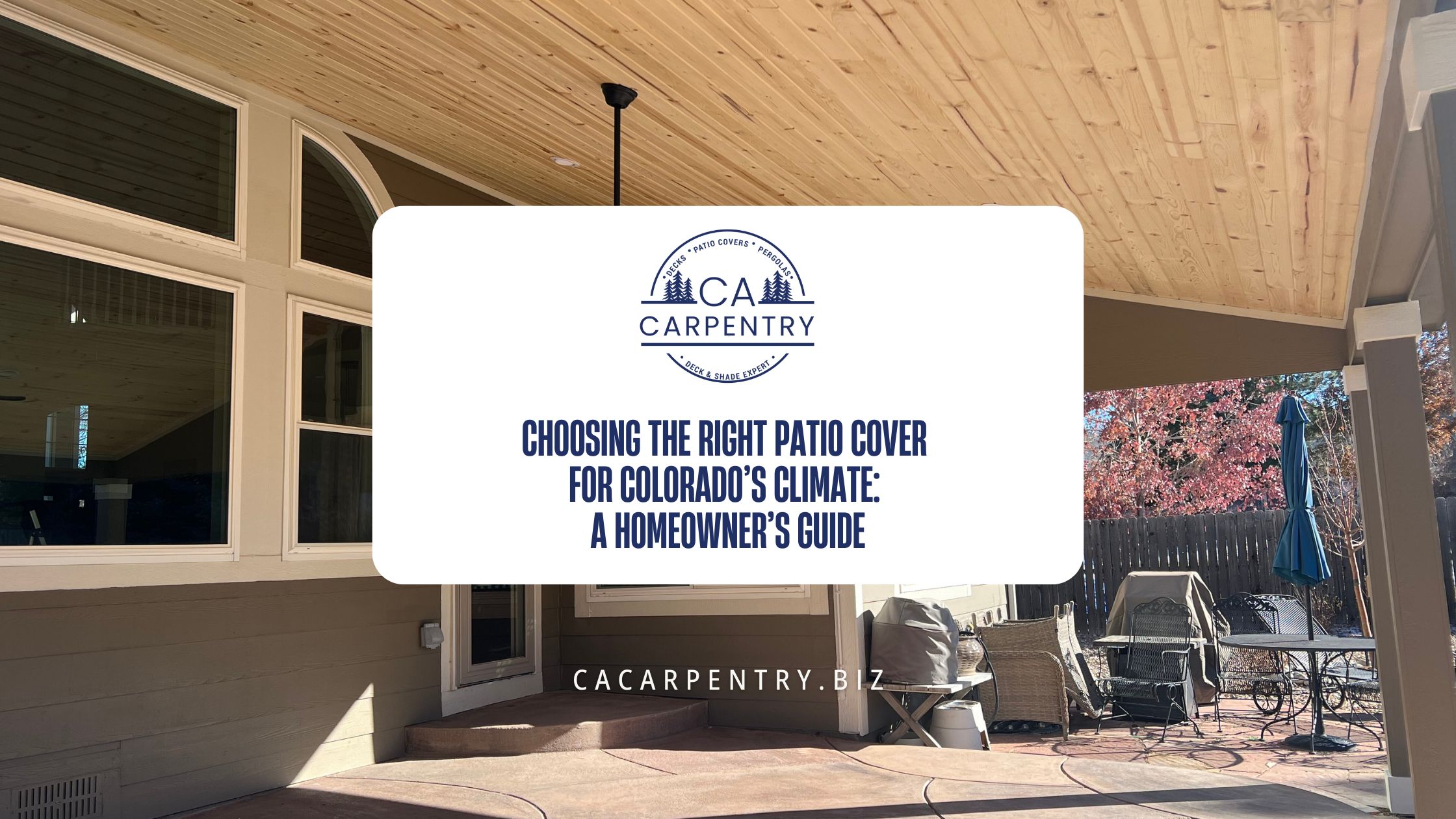

Colorado’s climate is dynamic and demanding—intense UV rays, heavy snowstorms, sudden wind gusts, and dramatic temperature swings all pose a challenge to outdoor structures.
This guide focuses exclusively on solid patio covers, highlighting why they’re a durable, stylish, and climate-compatible choice for Colorado homeowners looking to extend their living space outdoors.
Why Solid Patio Covers Make Sense in Colorado
Your patio cover must be more than visually appealing—it needs to perform in all four seasons. Here’s why solid structures, especially those using high-quality materials, stand out:
Intense UV Exposure
Colorado sits at a higher elevation, meaning the sun’s rays are stronger and more direct. A well-built solid patio cover, especially when sealed or stained with a UV-protective finish, offers both beauty and protection. It shades you and your furniture while resisting harmful UV degradation when maintained properly.
- Glulam (Glue-Laminated Beams) excel here by offering high strength and dimensional stability. They’re factory-sealed and can hold finishes exceptionally well, making them a low-maintenance option against UV exposure.
Heavy Snow Loads
Snowfall can vary significantly across Colorado, but many areas experience regular winter storms with heavy accumulation. Solid patio covers—whether constructed from redwood, cedar, pressure-treated lumber, or engineered materials like glulam beams—can be engineered to withstand the region’s snow load requirements (often 30 psf or more).
- Glulam beams can span longer distances without sagging, reducing the need for interior supports and allowing for more open space beneath the cover.
- Steel posts and beams provide unmatched strength, perfect for homeowners who want slim profiles without compromising load capacity.
- Sloped or gable roof designs help shed snow quickly, preventing buildup and structural strain.
High Winds
From the gusty plains to the powerful Chinook winds along the foothills, Colorado homeowners face serious wind challenges. Anchored correctly and designed with structural bracing, a solid patio cover provides excellent wind resistance.
- Rough sawn timbers offer significant heft and mass, naturally anchoring the structure and reducing sway in high winds.
- Steel reinforcements can be seamlessly integrated with wood to increase wind resistance, especially in open areas prone to gusts.
Wide Temperature Swings
A 70-degree day followed by overnight snow is common in Colorado. Such fluctuations stress most materials—but glulam beams and pressure-treated wood handle expansion and contraction exceptionally well, while steel remains dimensionally stable regardless of temperature shifts.
The Benefits of Choosing a Solid Roof Patio Cover
Timeless Aesthetic Appeal
Wood brings warmth and natural beauty that synthetic materials can’t replicate. Whether your home has rustic charm, modern elegance, or a mountain-style appeal, a solid patio cover enhances its look.
- Rough sawn timbers provide a bold, rustic appearance with rich wood grain textures that fit perfectly with Colorado’s mountain aesthetic.
- Glulam beams offer a sleek, modern look with the option for impressive clear spans and custom finishes.
- Steel accents can introduce an industrial-chic element, creating a contemporary fusion of natural and modern design.
Customizable Design Options
From open lattice pergolas to solid-roof extensions, solid patio covers allow for extensive design flexibility.
- Exposed glulam beams add architectural interest while supporting greater spans.
- Rough sawn posts wrapped in stone bases create a lodge-style feel.
- Steel brackets and hardware can enhance durability while adding modern flair.
Structural Integrity
Solid patio covers, when designed with the right combination of materials, are built to last.
- Glulam beams provide superior load-bearing capacity with fewer posts, making outdoor spaces feel larger and more open.
- Rough sawn timbers, especially cedar and redwood, naturally resist rot and insects while providing excellent structural strength.
- Steel supports and reinforcements ensure maximum longevity and stability, especially in exposed areas.
Seamless Integration with Your Home
Solid patio covers can be tailored to match roof shingles, siding, and trims—creating a cohesive extension of your home. Glulam and steel combinations are often used in modern home designs, while rough sawn timbers fit beautifully in rustic or craftsman-style homes.
Maintenance Considerations for Colorado Homeowners
While wood and hybrid structures require upkeep, modern materials minimize maintenance needs:
- Glulam beams are factory-treated and resistant to common warping issues.
- Rough sawn timbers benefit from regular sealing every 2–3 years to maintain their rugged beauty.
- Steel elements require minimal maintenance—occasional cleaning and a protective coating checkup is typically sufficient.
General maintenance includes:
- Seasonal Inspections: Check for surface cracks or wear.
- Snow Removal: Clear heavy snow from flatter roofs.
- Sealing/Staining: Plan routine treatments every few years, especially for wood elements.
Choosing the Right Roof Style for Your Solid Patio Cover
Solid Roof Patio Covers
For year-round protection, solid roofs are ideal.
- Shed Roofs: Simple, affordable, ideal for smaller spaces.
- Gable Roof: Excellent snow shedding, open and airy feeling.
- Hip Roofs: Clean lines, integrated appearance.
Glulam beams are perfect for supporting gable or shed roofs with expansive spans, while steel posts minimize obstructions beneath the cover.
Pergolas and Lattice Roofs
If filtered light is desired, pergolas made from rough sawn timbers offer both charm and airflow while handling Colorado’s elements gracefully.
Enhancements and Features to Consider
- Integrated Lighting: Recessed lights fit beautifully within glulam ceilings.
- Ceiling Fans: Supported by both glulam and steel beams.
- Beetle-Kill Pine Ceilings: A sustainable and unique Colorado design feature.
- Stone Accents and Fire Features: Combine with rough sawn timbers for a cozy, lodge-inspired look.
- Heaters and Audio Systems: Hidden in glulam beam structures for a clean finish.
Budget, Longevity, and Long-Term Value
Initial Investment
- Rough sawn timbers: Mid-range cost with high aesthetic value.
- Glulam beams: Slightly higher upfront cost, but with fewer structural limitations and stunning visuals.
- Steel accents: Investment in durability and minimal maintenance.
Maintenance Costs
- Wood elements need regular sealing every few years, glulam and steel components require less frequent attention.
Property Value
A thoughtfully designed patio cover with quality materials adds significant curb appeal and resale value.
Built for Colorado, Designed for You
A custom solid patio cover built with premium materials like glulam beams, rough sawn timbers, and steel supports ensures your outdoor space thrives in Colorado’s demanding climate. Whether your style is modern, rustic, or classic, your outdoor living area can be transformed into a protected retreat you’ll enjoy year-round.
Planning Your Project: What to Expect When Building a Solid Patio Cover
Once you’ve decided to invest in a solid patio cover, the next step is working with a professional who understands Colorado’s unique requirements. From permits and HOA guidelines to engineering for snow and wind loads, local expertise matters.
Permit and Code Compliance
Most Colorado municipalities require permits for patio cover construction, especially if the structure is attached to your home or includes electrical components. Working with an experienced contractor ensures your cover complies with local building codes, meets structural requirements, and passes inspection without delays.
Site Evaluation and Design Consultation
A quality patio cover starts with a thoughtful site evaluation. Professionals assess your space for slope, drainage, and sun orientation. From there, they’ll recommend roof styles and material combinations that match your home and withstand your local microclimate.
Material Selection and Customization
Colorado’s environment demands resilient materials—but that doesn’t mean you have to sacrifice aesthetics. Choose from natural stains that highlight the beauty of wood grain, powder-coated steel finishes that resist rust, and composite roofing panels for added insulation and longevity.
Installation Timeline
A typical patio cover installation takes anywhere from a few days to a few weeks, depending on design complexity and material availability.
Your Outdoor Space, Elevated
A solid patio cover isn’t just a protective structure—it’s a lifestyle upgrade. Whether you’re entertaining under the stars, sipping coffee during a spring shower, or warming up by a fire pit in winter, this investment expands how and when you enjoy your home. With the right materials and a design tailored to Colorado’s conditions, your backyard becomes a true extension of your living space.

